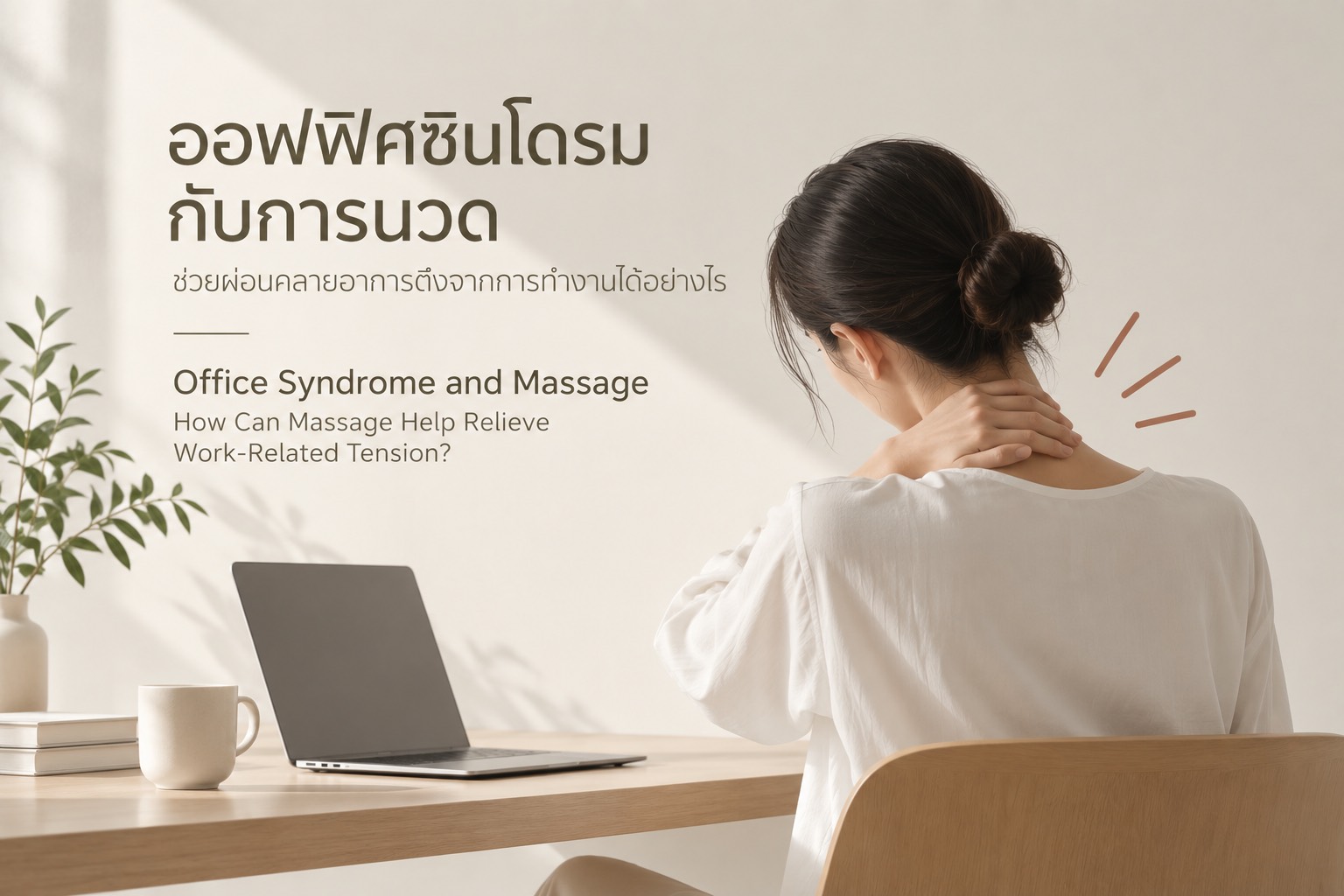
Spending long hours in front of a computer, looking down at your phone, staying in the same position for extended periods, or even dealing with everyday work stress can leave your neck, shoulders, back, and arms feeling tight and uncomfortable. These symptoms are commonly associated with what many people refer to as “office syndrome.”
For those who spend most of the day working in front of a screen, massage can be one way to step away from the daily routine, unwind, and help relax muscles that feel tense after hours of repeated use.
What Is Office Syndrome?
“Office syndrome” is a commonly used term for a group of aches, tension, and discomfort associated with work habits, particularly staying in the same position for long periods and repeatedly using certain muscle groups.
Common areas of discomfort include:
* Neck and upper neck
* Shoulders
* Shoulder blades and upper back
* Lower back
* Arms, wrists, and hands
Symptoms can vary from person to person, and discomfort in these areas does not necessarily mean that office syndrome is the cause.
Why Do Office Workers Experience Neck and Shoulder Tension?
Take a moment to notice how you sit during the day. You may spend several hours in front of a computer without changing position. Some people lean their head forward, raise or tense their shoulders without realizing it, or work at a desk and screen that are not positioned comfortably for their body.
When these habits continue over time, certain muscles may remain active or held in the same position for extended periods, which can contribute to feelings of fatigue, stiffness, and tension. Stress can also play a role. During busy or demanding periods at work, many people unconsciously tense their neck and shoulders.
How Can Massage Help?
For people experiencing muscle tension or fatigue from work, massage can be part of a self-care and relaxation routine.
Massage and appropriately applied pressure to tense muscles may help promote relaxation, ease the feeling of muscle tightness, and give the body a welcome break after spending long periods in the same position.
However, massage should be viewed as a way to support relaxation and ease everyday muscle discomfort, rather than as a diagnosis or treatment for an underlying medical condition.
Which Type of Massage Is Best for Neck and Shoulder Tension?
There is no single type of massage that is right for everyone. The best choice depends on where you feel tension, your preferred level of pressure, and your individual comfort.
- Neck & Shoulder Massage is suitable for those who want to focus specifically on areas that feel tense after long hours of desk work or computer use.
- Thai Massage combines pressure and stretching across different areas of the body, making it suitable for those who want to relax more than just the neck and shoulders.
- Oil Massage may be a good choice for those looking for a gentler, more relaxing experience. Before your session begins, you can let your therapist know which areas you would like them to focus on.
Most importantly, communicate with your therapist about where you feel tension, which areas you would prefer not to be massaged, and the level of pressure that feels comfortable for you.
Stronger Pressure Does Not Always Mean a Better Massage
When muscles feel particularly tight, it can be tempting to think that stronger pressure will always produce better results. In reality, the right level of pressure is different for everyone.
If you experience excessive pain, numbness, or discomfort during your massage, let your therapist know immediately. A good massage should not be about enduring pain. The pressure should be appropriate for your body and your personal comfort.
Is Massage Alone Enough?
If your discomfort is related to your working habits, making small changes to your daily routine can be just as important.
Getting up and changing position regularly, adjusting your desk and screen to a comfortable height, stretching or moving throughout the day, and avoiding staying in the same position for extended periods can all complement massage as part of your everyday self-care routine.
Rather than waiting until your body feels extremely tense before taking care of it, giving yourself regular opportunities to move, rest, and reset throughout the day can make a meaningful difference.
When Should You Seek Professional Medical Advice?
Massage should not be relied upon as the only approach when symptoms are severe, persistent, or unusual.
If you experience severe or ongoing pain, numbness, muscle weakness, pain radiating into your arms or legs, symptoms following an injury, or other concerning changes, consider consulting a doctor or physiotherapist for an appropriate assessment.
This is because symptoms that appear similar to “office syndrome” may sometimes have other causes that require further evaluation.
Let Massage Be a Moment to Return to Yourself
After a long working day, what your body needs may not simply be massage for a tense area. Sometimes, it is the opportunity to step away from the screen, leave the rush of the day behind for a while, and give yourself time to slow down.
At Kham, you can let us know which areas you would like your therapist to focus on, your preferred level of pressure, and any areas you would rather not have massaged before your session begins. This helps us tailor the experience to your individual comfort and needs.
Self-care does not have to begin only when your body feels like it has reached its limit.
Sometimes, simply giving yourself permission to pause is already a good place to start.
Prepared by Kham Massage and Spa
Category: Thai Massage Knowledge & Wellness
Last Updated: September 17, 2026
Disclaimer: This article is intended for general educational purposes regarding traditional Thai massage. It is not a substitute for medical diagnosis, treatment, or advice from a qualified healthcare professional.