Start with the Massage Medium, Not Just the Service Name
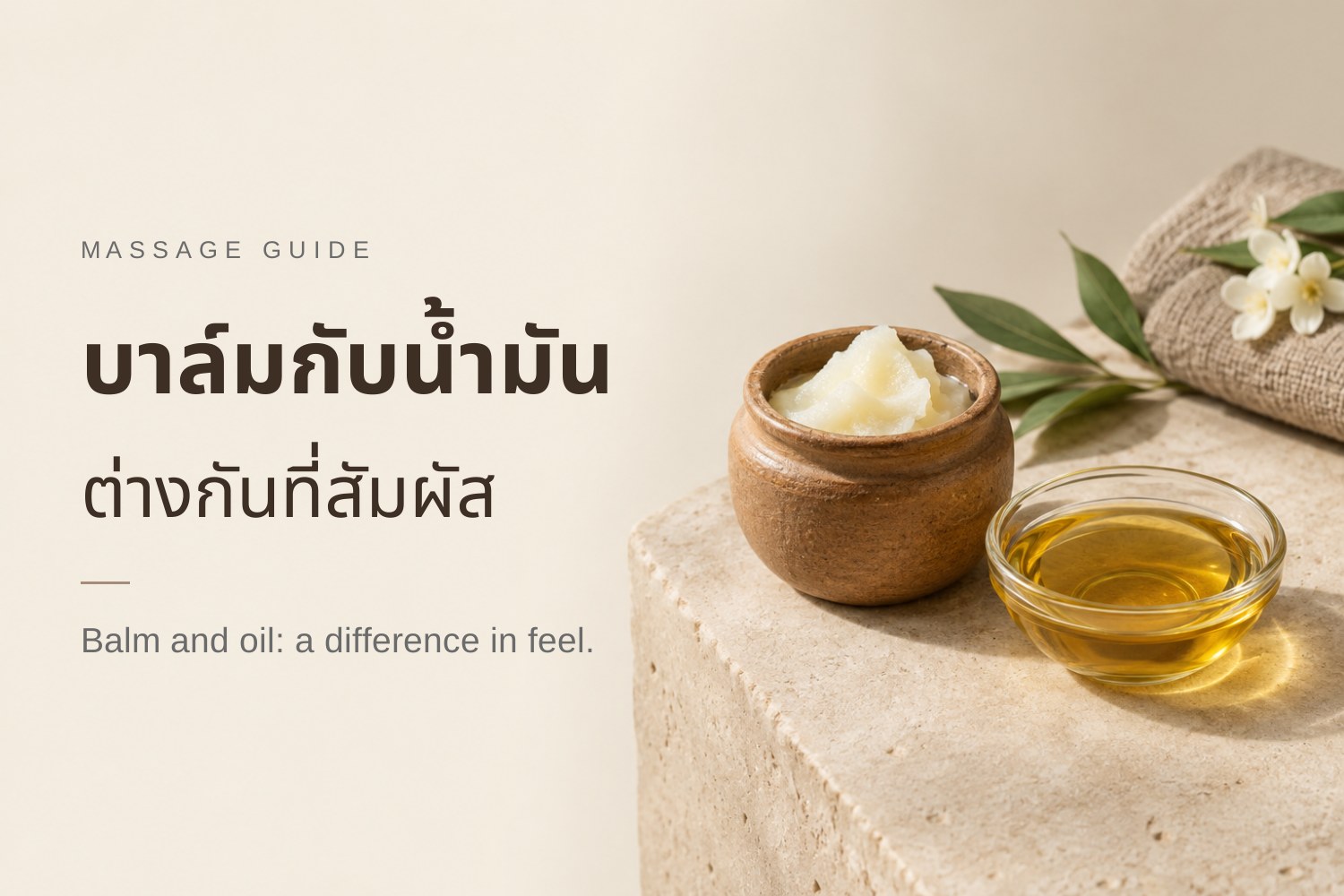
How does Thai massage with balm differ from oil massage? The starting point is the product’s texture and how it spreads over the skin. Balm is generally semi-solid, while oil is liquid. This difference influences how the product spreads and feels as hands move over the skin, but it does not define the entire massage experience.
The massage medium and hand technique are separate elements. The medium contributes to glide, while pressure, rhythm, and hand movements depend on the massage technique. Balm massage is therefore not necessarily firmer, nor is oil massage necessarily gentler. Even with the same product, the sensation can vary depending on how much is used and how it is applied.
If you are choosing for the first time, consider your texture preferences separately from your preferred pressure, then ask about the details of each service. For example, ask which medium is used, what the rhythm is like, and how pressure can be adjusted for comfort. Clearly sharing your preferences may help you feel more relaxed, rather than relying on the service name alone.
How Massage Balm and Body Massage Oil Spread Differently
Massage balm is generally semi-solid, so it needs to be spread outward from the point of application. Body massage oil is liquid, and many formulas spread more readily over the skin. The useful distinction to observe is how the product spreads, rather than judging it by thickness alone.
During a massage, the medium helps hands glide over the skin. However, glide does not depend solely on whether the product is a balm or an oil. The formula, the amount used, and the way it is spread all influence the sensation. Balm does not necessarily feel resistant once spread, and different oil formulas do not necessarily provide the same degree of glide.
For a clearer comparison, notice the initial application separately from how the product feels once spread across the skin. The first stage reveals the product’s texture, while the second gives a clearer sense of glide as hands move over the skin. If there is more or less glide than you prefer, let the person providing your massage know so they can consider the amount used and how it is spread, rather than deciding that a particular medium is unsuitable based on the first sensation alone.
What affects glide, scent, and warming or cooling sensations?
Glide during a massage and the feeling left on your skin are two different things. As hands move over your skin, you may notice how continuous the glide feels or how much friction there is. After the hands have passed, separately notice whether your skin feels oily, coated, or sticky, rather than letting one moment define the whole experience.
The amount of product, how it is spread, and the rhythm of hand movements all influence the sensation alongside the product’s texture. The name balm or oil alone does not tell you how much glide to expect. When comparing them, ask about the texture, the amount used, and the massage technique to get a clearer sense of what you may feel.
Scent and warming or cooling sensations depend on each formula’s ingredients; they are not features of every balm or oil. The intensity of these scents or sensations is not a measure of massage quality. If you prefer a mild scent or dislike warming or cooling sensations on your skin, share your preferences beforehand. A sensation that suits you may help you feel more relaxed than choosing by the product name alone.
How to choose between balm and oil massage based on your preferences
Start with what you would like to feel during your massage: how smoothly and continuously you prefer hands to glide, what feeling you are comfortable having left on your skin, and what kinds of scents you enjoy. Consider these separately from your pressure preferences. Choosing balm or oil does not determine the pressure you should receive, and the service name alone may not provide every detail.
Before choosing, ask about the product name, ingredients, scent, and how it is spread, as well as the massage sequence, including hand movements and pauses. If you still find it hard to imagine, describe your preferences in simple terms, such as wanting a continuous glide, disliking strong scents, or preferring light pressure. This can help guide your choice rather than relying on the service name.
During your massage, you can communicate your preferences for pressure, speed, and rhythm. Be clear if you would like lighter pressure, slower movements, or a pause. If the product, scent, or warming or cooling sensation feels uncomfortable, speak up and ask to stop so you can assess your comfort first. There is no need to push through every step. Sharing how you feel may help make your relaxation time more suited to your preferences.
Before choosing a service, compare durations and ask about the details
Start by comparing durations that fit your plans, then explore the type of touch you prefer. When two services have the same duration, ask about the products and massage techniques as well. The service name alone does not fully describe how the massage will feel.
- Product texture: Ask what the balm or oil used feels like, rather than assuming from the name alone.
- Application: Ask how the product is used and spread during the massage.
- Glide: Explain whether you prefer a continuous glide or another type of touch, then ask whether the service matches that preference.
- Scent: Ask about the scent of the formula used, especially if there are particular scents you like or dislike.
- Massage technique: Ask about the pressure and rhythm, as well as how to communicate if you feel uncomfortable.
Thai massage with balm 60 min and Oil massage 60 min are examples of services with the same duration. You can use duration as a starting point for comparison, then ask more about how each service feels, without assuming that one suits everyone.
Frequently asked questions
Which offers more glide: massage with balm or oil massage?
Oil is generally liquid and spreads easily into a thin layer on the skin, while balm is semi-solid and may initially feel thicker. Glide depends on the formula, the amount used and how it is spread, so the product type alone does not determine how it will feel.
Do all massage balms feel equally warming or cooling?
Depending on the ingredients and amount used, a balm may feel warming, cooling or neither in any noticeable way. Sensations can also vary from person to person. Ask about the formula before your massage and share your preferences.
Does Thai massage with balm require firmer pressure than oil massage?
Not necessarily. The product used does not determine how much pressure is needed. Pressure depends on the massage style, technique and your comfort. Share your preferred pressure level and ask for an adjustment if you feel uncomfortable.
What should I ask about the product if I dislike strong scents?
Ask what the product smells like, how strong the scent is and whether it contains added fragrance or essential oils. You can ask to smell it before use and check whether a lightly scented formula is an option. Share your preferences before the massage begins.
What else should I compare when two services have the same duration?
Compare the massage style, the product used, glide, scent and how the product feels on your skin afterward. Also ask about adjusting pressure to suit your comfort. The listed oil massage and Thai massage with balm both last 60 minutes, but equal duration does not mean they will feel the same.