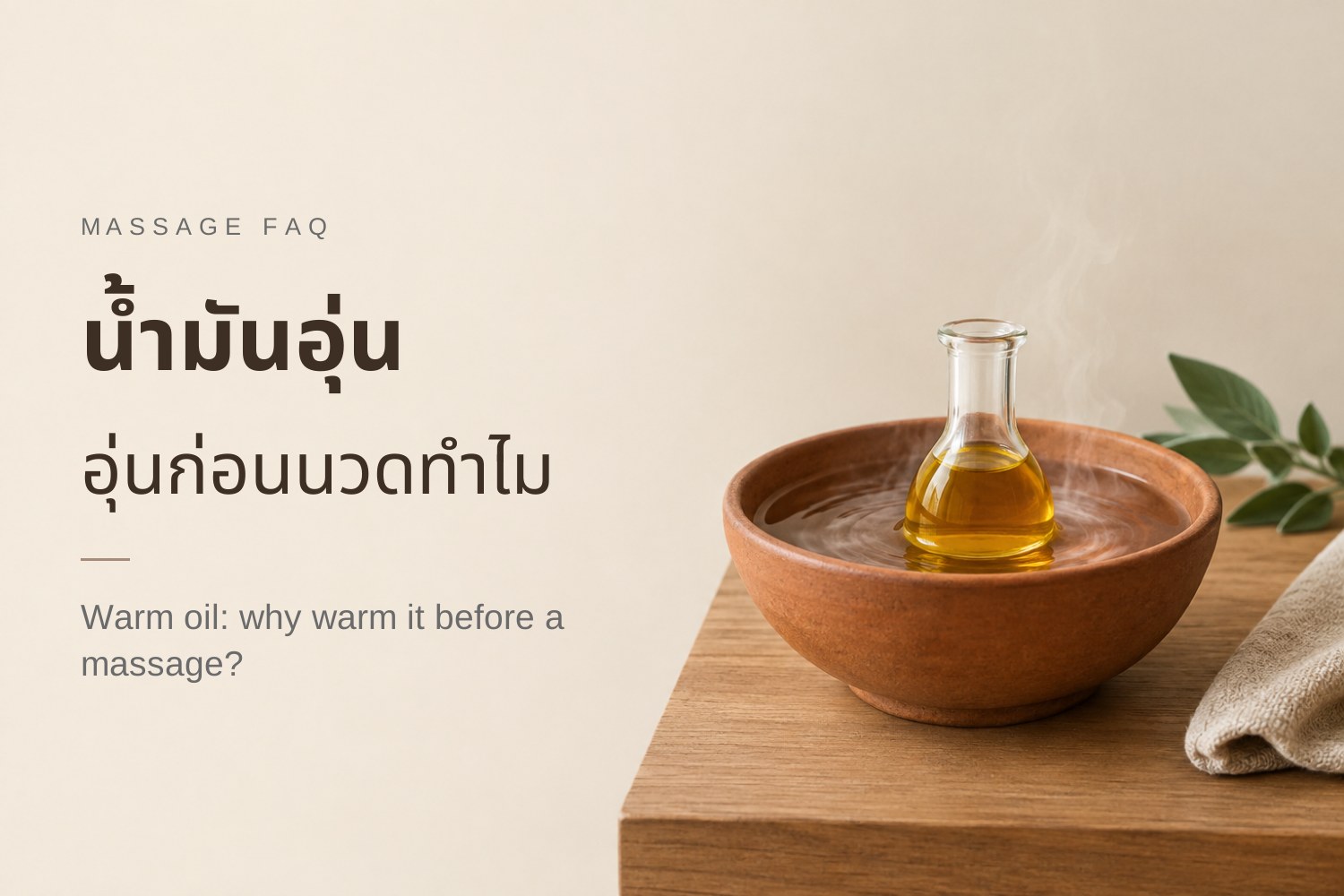
Why Warm Oil Before a Massage? Start with the First Touch on Your Skin
Warming massage oil affects how it feels when it touches your skin. Gently warmed oil may feel more comfortable to some people than a cool first touch. Warmth is therefore a sensory preference, not a requirement for every oil massage, and preferred temperatures can vary from person to person.
Oil and warmth serve different roles. Oil helps hands glide smoothly over the skin, while warming it adds a temperature element to that touch. This does not mean oil must be warm to be used for massage, or that warmth increases massage pressure.
If this is your first time, notice whether the initial touch feels comfortably warm or hotter than you prefer, and tell your massage provider how it feels. You do not need to put up with heat simply because you think it is part of the process. The aim of choosing a temperature is comfort on your skin, not making the oil progressively hotter.
How Does Warm Massage Oil Relate to Relaxation?
Warm massage oil may help some people feel relaxed through a sensation they enjoy, but warmth is only one part of the experience. The rhythm of touch and personal preferences also contribute to comfort. The same oil temperature will not necessarily feel equally relaxing to everyone.
The sensation of temperature should be considered separately from scent. Warm oil does not necessarily have to be scented, and enjoying warmth does not mean you will also enjoy the accompanying scent. To understand your own preferences, try noticing separately how you feel about the warmth, scent, and rhythm of the massage.
During your massage, you can say whether you would like the temperature or rhythm of touch adjusted, rather than waiting until you feel more uncomfortable. Some people may prefer just a little warmth, while others may feel more comfortable with oil that has not been warmed. Relaxation should be guided by how the touch feels to you, rather than an expectation that warm oil will offer the same experience for everyone.
Warmth and Massage Pressure Are Separate Things
Oil temperature and massage pressure are two different sensations. Warmth is the temperature you feel on your skin, while pressure is the weight applied as hands press or move over your body. Warm massage oil does not mean the pressure needs to be firm, and a light touch does not indicate how warm the oil will feel.
Separating these two sensations makes it easier to explain your preferences. For example, you might prefer slightly warm oil and a light touch, or find the temperature comfortable but the pressure too firm. Rather than simply asking for a lighter touch, try specifying that you would like less pressure so it is not confused with wanting cooler oil.
During your massage, notice separately whether the warmth feels comfortable on your skin and whether the pressure suits your preferences. If either feels uncomfortable, say so clearly at that moment. Choosing a warm oil massage does not mean you need to accept firm pressure. Sharing how you feel helps guide a conversation about suitable adjustments, though not every request can be accommodated in every situation.
Warmer Does Not Always Mean More Comfortable
The comfort of warm oil varies from person to person. A temperature that feels right to one person may feel too hot to another. The level of heat should not be used to judge the quality of a massage, and there is no need to tolerate the same warmth as someone else.
Before oil is applied over a larger area, ask to check how it feels on a small area of skin first. Notice whether the warmth feels comfortable or makes you want to pull away. If it feels too hot or uncomfortable on your skin, speak up immediately and ask for that contact to stop. There is no need to wait and see whether you get used to it.
Even if the first touch feels comfortable, continue noticing how you feel throughout the massage and speak up if that changes. Saying that the warmth feels right or that it feels too hot for your skin at the moment communicates more clearly than repeatedly asking for more heat. The aim is a warm touch that may help you feel relaxed, rather than increasing the heat as much as possible.
What to Ask and Share Before Trying a Warm Oil Massage
Before you begin, separate your questions into three areas: the oil, its warmth, and the massage pressure. This can help you express your preferences clearly. You do not need to know exactly what you prefer on your first visit—you can communicate how you feel during the massage.
- Ask about the type of oil and scent that will be used. If an ingredient has previously felt uncomfortable on your skin, or there is a scent you dislike, mention it before starting rather than choosing by the scent name alone.
- Explain how much warmth you prefer, such as slightly warm oil or no hot sensation. Ask for the oil to be applied to a small area first so you can assess your comfort. You do not need to tolerate more warmth than you enjoy.
- Specify your preferred pressure separately from the warmth. For example, you might prefer slightly warm oil and gentle pressure. Warmer oil does not mean the massage pressure needs to increase.
- During the massage, if the oil feels too hot, your skin feels irritated, or the pressure feels too firm, speak up straight away and ask to pause or adjust. You do not need to wait until the session ends.
Frequently asked questions
Does massage oil always need to be warmed?
No, massage oil does not always need to be warmed. Warming it creates a warm sensation when it first touches your skin and may help you feel more relaxed. Comfort depends on personal preference, and warmer oil does not necessarily feel better.
How does warm oil feel compared with room-temperature oil?
Warm oil feels warm on contact with your skin, while room-temperature oil may feel cooler at first, especially in a cool room. The sensation can vary with the surrounding temperature and your personal preferences, so choose a level of warmth that feels comfortable on your skin.
Does warm oil massage mean using firmer pressure?
Not necessarily. Oil temperature and massage pressure are separate choices. Warm oil can be used with gentle pressure or a level you find comfortable. Explain your preferences for temperature and pressure separately.
What should I do if the oil feels too hot?
Tell the person providing your massage immediately and ask them to stop applying the oil. Do not endure uncomfortable heat just to continue the massage. Wait for the temperature to be adjusted, then test the oil on a small area of skin to make sure it feels comfortable before continuing.
What should I ask before trying warm oil massage for the first time?
Ask what type of oil is used, what ingredients or scents it contains, and whether the warmth can be adjusted to your comfort. Also ask about testing the oil on a small area of skin before starting and choosing your preferred massage pressure. If an oil or scent has made your skin uncomfortable before, mention this in advance.