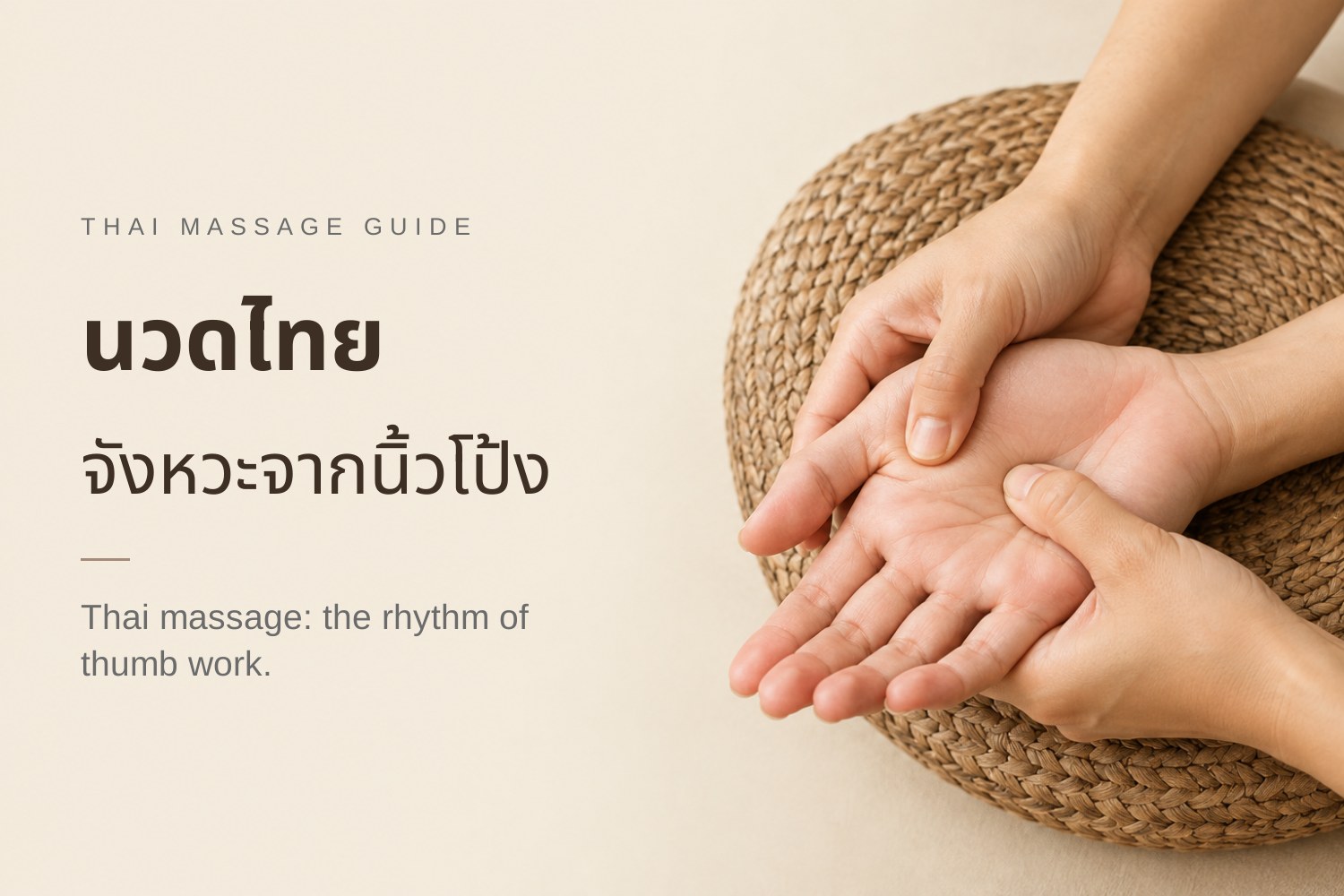
What Role Do Thumbs Play in Thai Massage?
Thai massage involves more than stretching. It also uses different forms of hand contact, including palm contact and thumb pressure. The thumb has a smaller contact area than the palm, making the sensation at a particular spot more distinct. This clearer sensation does not necessarily mean greater pressure is needed.
For first-time visitors, noticing how pressure begins, eases and moves to another position can reveal more about the experience than simply judging it as firm or light. Thumb pressure in Thai massage may alternate to create a continuous sequence of contact from one position to the next. These rhythms are part of Thai massage for relaxation, not a test of how much pressure you can tolerate.
During your massage, notice which kinds of contact feel comfortable, and tell your massage provider when you would like the pressure or rhythm adjusted. If something feels uncomfortable, you do not need to endure it. Understanding the role of the thumbs is a guide to noticing your own sensations, rather than instructions for trying the pressure techniques yourself.
Why Do Thumb Placement and Supporting Hands Matter?
The fleshy pad of the thumb makes contact with the skin, creating a different sensation from poking with a fingertip or nail. Notice whether the initial contact feels gentle before the pressure gradually increases. If it feels like poking or is uncomfortable, ask your massage provider to adjust rather than assuming it is something you must tolerate during a massage.
Other parts of the hands support the area being massaged while the thumbs apply pressure. For example, when the palm is being massaged, a supporting hand helps hold it so you do not have to keep it tense to maintain the position yourself. Rather than focusing only on the thumbs, also notice the sense of steadiness and comfort provided by the supporting hand.
Thumb placement may change depending on the area and position, so the hands do not need to remain in the same shape throughout the massage. You can notice whether contact begins gently, whether support is maintained as positions change, and how comfortable you feel at each stage. These details can help you communicate more clearly about the contact without memorizing pressure points or thumb angles, or trying to apply pressure yourself.
How does applying and easing pressure differ from alternating thumb pressure?
Applying and easing pressure describes how the pressure from a thumb changes during each contact. It begins with a light touch, gradually increases, then eases off, rather than staying constant throughout. During a massage, the sensation may shift from a light touch to more noticeable pressure before gradually becoming lighter again.
Alternating pressure describes how the two thumbs work together. As one thumb increases pressure, the other may ease off or prepare to move to another position. Both thumbs do not need to press at the same time, and alternating pressure does not necessarily mean a fast rhythm.
In Thai massage, these two patterns may occur together: each thumb applies and eases pressure while the two sides alternate roles. For first-time visitors, noticing this distinction may make it easier to communicate preferences, such as a more gradual increase in pressure or a slower rhythm, without needing the same number of repetitions or hold duration at every position.
How does changing position connect the touch?
Pressing in one position feels different from moving to the next area. The first focuses on applying and easing pressure within one area, while the second also involves changing the point of contact. Continuous contact therefore does not mean holding pressure while dragging a thumb along the entire path.
When pressure eases before a change of position, the touch may become lighter during the transition, then more noticeable as pressure begins in the next area. The other hand may remain in supporting contact during the change, creating a sense of continuity without strong pressure throughout every movement.
Thumb pressure in Thai massage also differs from palm pressure, which covers a broader area, while stretching involves changes in body position or movement. These elements may appear together in Thai massage for relaxation, but they do not all feel the same. If a change of position feels uncomfortable or creates friction, ask the massage provider to adjust the pressure and rhythm rather than continuing to accept an uncomfortable sensation.
How to Communicate Your Pressure Preferences at Your First Massage
Before the massage begins, say whether you prefer light pressure or would like to start gently, and point out any areas where you do not want pressure applied. Everyone’s comfort level is different, so there is no need to choose the same pressure as someone else or endure pressure just to complete a sequence.
During thumb pressure in Thai massage, notice how each press, release, and change of position feels. If the pressure goes beyond your comfort level, you can simply say, “Please use lighter pressure here” or “Please press more slowly,” clearly indicating the area. Even if the previous spot felt comfortable, the next may need a different level of pressure. You can keep sharing how you feel throughout the massage.
If you feel pain, ask for pressure on that area to stop immediately, rather than waiting until the end of a line or sequence. If you need a pause, you can say, “I’d like a short break,” before deciding whether to continue. Noticing how the touch feels and communicating openly matters more than choosing strong pressure. This allows the pressure and rhythm to be adjusted to your comfort and may help you feel more relaxed during the massage.
If you would like to try it yourself, Kham offers Thai massage (Heavy) 60 min.
Frequently asked questions
How does using thumbs differ from using palms in Thai massage?
Thumbs have a smaller contact area than palms, allowing pressure to be applied more precisely. Palms spread pressure over a wider area, so the sensation can differ even when a similar amount of pressure is applied.
Does thumb pressure in Thai massage need to be firm?
Thumb pressure does not always need to be firm. The smaller contact area can make pressure feel more noticeable. It is better to start gently and adjust to your comfort, communicating throughout the massage.
What is the difference between alternating thumb pressure and pressing with both thumbs together?
Alternating pressure means pressing with one thumb and then the other, creating a continuous rhythm of pressing and releasing. Pressing together means applying pressure with both thumbs at the same time. For either approach, the pressure and rhythm should suit the contact area and your comfort.
Why is pressure released before moving to the next position?
Releasing pressure before repositioning helps reduce dragging or pulling on the skin while pressure is still being applied. It also allows the thumbs to settle gently into the next position. The sequence of pressing, releasing and then moving helps keep the touch smooth and continuous.
What should I say if the pressure feels too strong?
You can simply say, “Please use less pressure,” and point out where you feel uncomfortable. If it still feels uncomfortable after an adjustment, ask for pressure on that area to stop. You do not need to endure pressure just to keep the massage going.