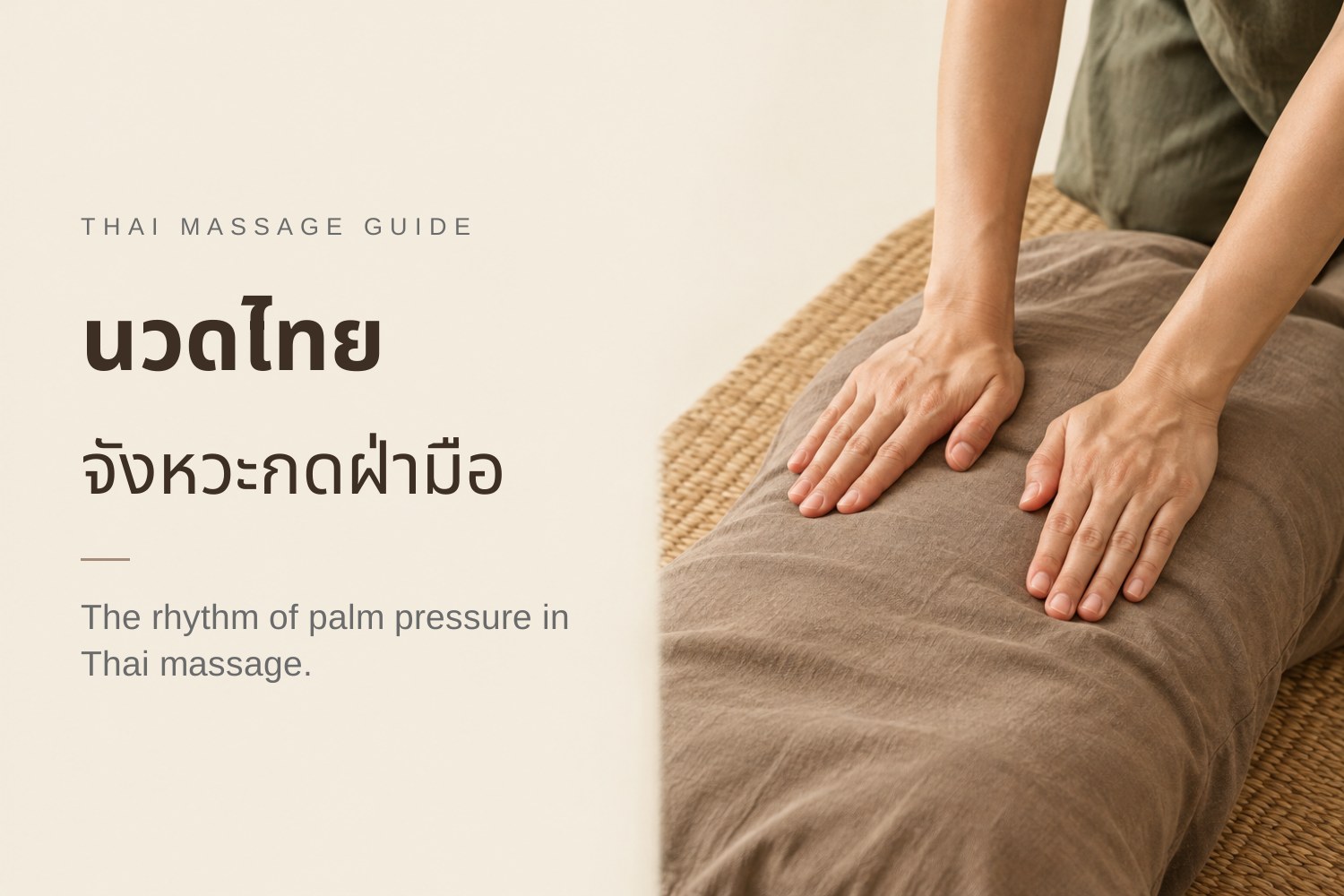
What Is Palm Pressure in Thai Massage?
Palm pressure in Thai massage involves placing the palm on an area, gradually adding weight, and then releasing it in a rhythm. One noticeable feature is that the hand stays in contact with the same area during the press rather than moving continuously across it. If you are new to Thai massage, think of a broad contact area with gradually changing pressure rather than pressure focused on a small point.
This differs from stroking, in which the hand moves along the skin, while kneading involves circular movements. The difference is therefore not simply the amount of pressure, but also the direction of movement and the rhythm of contact. A sequence of Thai massage may include several techniques, so not every touch should be understood as the same kind of palm pressure.
During the massage, try noticing how the pressure gradually increases and whether you feel comfortable as it is released. There is no need to memorise how the pressure is applied or try to reproduce it. If the pressure feels stronger than is comfortable, you can ask for it to be adjusted or request a pause. The feeling of relaxation may vary from person to person, so there is no need to endure pressure to match someone else’s experience.
How Does the Palm’s Contact Area Affect the Sensation?
The palm has a broader contact area than the fingertips, so it distributes weight differently across the area being touched. With a similar overall amount of weight, full-palm contact and fingertip contact may feel different. The former may feel like broad pressure, while the latter may feel more concentrated in a smaller area.
However, a broader contact area does not necessarily mean a lighter touch. The weight applied, the contact location, and the recipient’s comfort all contribute to the sensation. A palm that gradually adds weight may feel different from one applying firm pressure, even when the contact areas are similar in size. Hand size alone should therefore not determine whether the pressure suits you.
For first-time visitors, describing how the contact feels can communicate your preferences more clearly than simply saying you like more or less pressure. For example, you might feel comfortable when pressure is spread broadly, or find it too firm in certain areas. You can ask for the pressure to be adjusted to your comfort at that moment, without waiting for the press to finish. Noticing both the contact area and the amount of pressure may help you better understand your preferences during the massage.
How Does Shifting Body Weight Differ from Using Arm Strength?
Palm pressure in Thai massage involves more than pushing down with arm strength alone. It also involves positioning the body and shifting body weight towards the palm resting on the recipient. The difference lies in how pressure is applied, not simply how firm or light it feels. The arm helps transfer weight from the body’s position to the area of contact.
As weight gradually shifts towards the palm, the recipient may feel pressure building steadily, then easing as the weight shifts back. This can feel different from individual downward pushes with the arms. However, sensation alone is not enough to tell which method is being used, so there is no need to keep assessing the technique by how firm the contact feels.
For first-time visitors, it helps to distinguish between strong pressure and pressure that feels right for you. They are not the same thing. Shifting body weight does not necessarily mean applying strong pressure, and stronger pressure does not necessarily feel more relaxing. If you find yourself tensing against the pressure, you can ask for it to be eased. Describe your preference directly, such as asking for lighter pressure or a slower increase in pressure.
Why Does the Rhythm of Pressure and Release Matter?
The rhythm of Thai massage includes more than the moment when the palm presses down. It also includes the initial contact, the gradual increase in pressure and the easing of that pressure. Thinking of these as a sequence makes it easier to understand: placing the palm begins the contact, before pressure gradually builds and then decreases to move into the next phase.
The release is therefore part of the continuous movement, rather than simply a gap between presses. You may notice that easing pressure gradually feels different from withdrawing it quickly. Even when the pressing phases feel similarly firm, the overall experience may differ depending on how pressure and release flow into each other.
A comfortable rhythm can vary from person to person. Some prefer pressure to build and ease slowly, while others prefer a more compact rhythm of contact. During your massage, notice whether you feel comfortable through both the pressure and release phases, then express your preference clearly—for example, by asking for the pressure to ease more slowly. Adjusting the rhythm to your preferences may help you feel more relaxed without increasing the firmness.
A Comfortable Experience Starts with Sharing Your Pressure Preference
Before your massage begins, clearly share your preferred pressure level—for example, whether you would like to start gently or prefer moderate pressure. If you are unfamiliar with palm pressure in Thai massage, you can ask to begin gently, then share how it feels so the pressure can be adjusted to your comfort.
During the massage, notice both the amount of pressure and the rhythm of pressing and releasing. If the pressure feels too strong, you tense up, or you find yourself holding your breath, speak up straight away with a short phrase such as Please use a little less pressure or Could we pause for a moment? When it feels right, you might say This rhythm feels comfortable to communicate both the pressure and pace you prefer.
Your comfort level may vary from one area to another, so the pressure does not need to stay the same throughout. Nor do you need to endure strong pressure to make the massage worthwhile. Afterwards, change position slowly and get up when you feel ready. Take note of the pressure level you preferred so you can share it at your next massage.
If you would like to try it yourself, Kham offers Thai massage (Heavy) 60 min.
Frequently asked questions
How does palm pressure differ from finger pressure in Thai massage?
The palm has a broader contact area, spreading pressure across a larger area than the fingers. Fingers make contact with a smaller area, so the pressure is more focused. How firm it feels also depends on the weight applied and your personal comfort.
Does a broader palm contact area always mean gentler pressure?
Not necessarily. A broader contact area spreads pressure, but the person giving the massage can still transfer different amounts of weight through the palm. The sensation depends on contact area, weight and rhythm together. Explain what pressure feels comfortable rather than judging by palm contact alone.
Why does Thai massage use a press-and-release rhythm?
Pressing and releasing allows pressure to rise and fall in stages rather than remain constant. Gradually applying and easing the weight gives you time to notice how it feels and communicate your comfort during the massage. A rhythm that suits you may help you feel relaxed.
Does Thai massage need firm pressure to feel relaxing?
No. Relaxation depends on more than pressure alone. Weight, rhythm and personal comfort all play a part. Light or moderate pressure may also help you feel relaxed. Avoid enduring pressure that makes you tense up or hold your breath.
What should I say if the pressure feels too firm?
You can say directly, “A little lighter, please,” or “The pressure feels too firm here,” and point out the area that feels uncomfortable. If you need a pause, ask for the pressing to stop. After the pressure is adjusted, let the person giving your massage know whether it feels more comfortable.