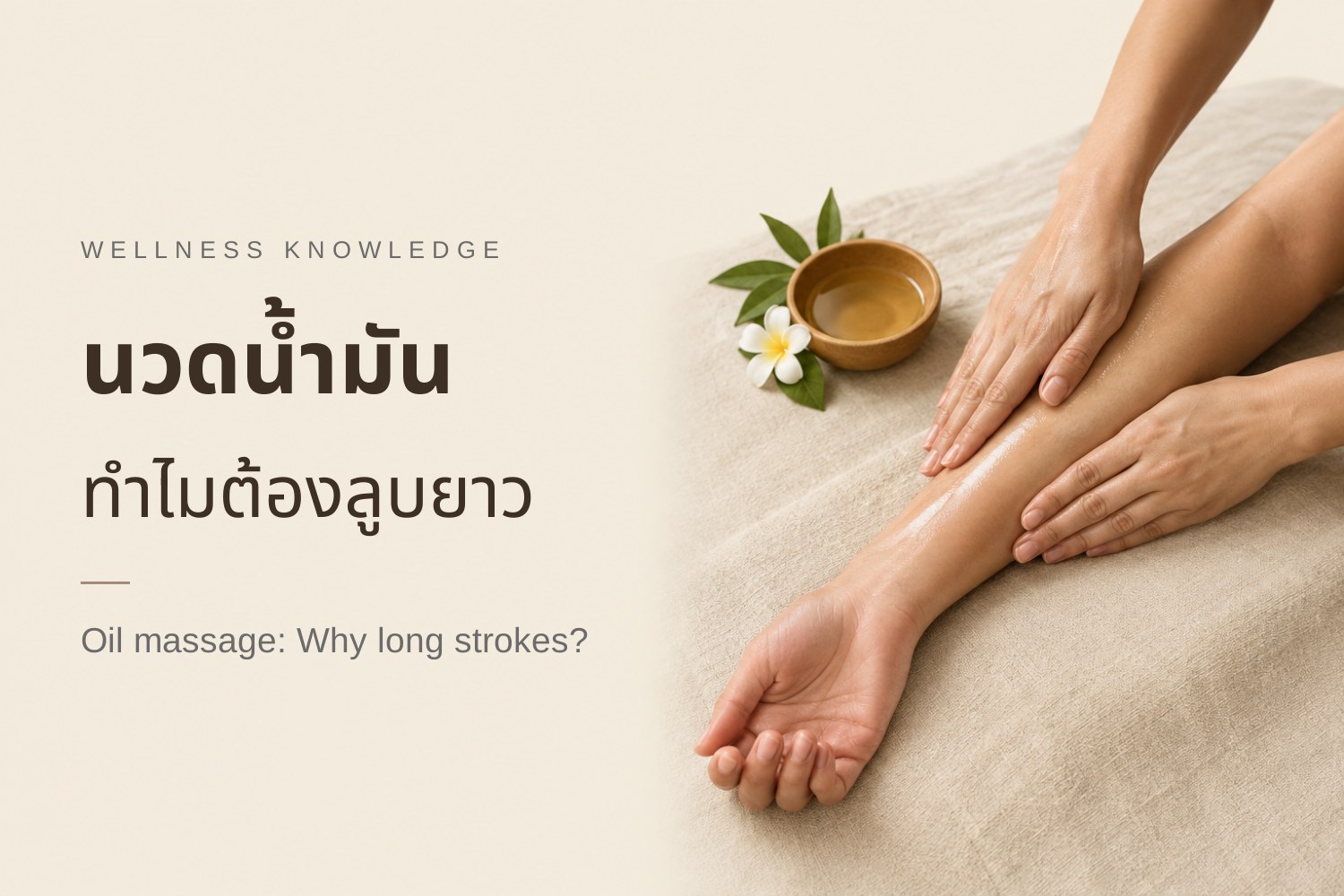
What Are Long Strokes in Oil Massage?
A long stroke is a continuous movement of the palm along the area being massaged, rather than a series of short, separate touches. In relaxing oil massage, this connects contact from one point to another without needing to stop the hands at every point along the way.
Imagine a massage along the arm: the palm moves along its length before changing direction or returning to begin the next stroke. What you notice is not just how far the hand travels, but also the gentle transitions and steady, unhurried rhythm. This continuity may help the contact feel gradual and relaxing.
Long strokes are one of the techniques used in oil massage, not the only movement used throughout a session. Hand movements may vary depending on the area being massaged and the recipient’s comfort. A longer stroke does not necessarily mean stronger pressure. For first-time visitors, explaining which movements feel comfortable or too firm communicates preferences more clearly than focusing on stroke length alone.
How Does Oil Help Hands Glide Over the Skin?
Oil reduces friction between the hands and skin, allowing the palms to glide more smoothly over the area being massaged. During long strokes, it reduces the sensation of dragging or pulling on the skin, making it easier to connect movements than when moving hands over dry skin.
However, glide and pressure are different things. Glide concerns movement across the skin, while pressure concerns the force applied during contact. Using oil does not necessarily mean the massage will be gentle or firm. Even when the hands move smoothly, the recipient may still find the pressure stronger than feels comfortable.
The amount and texture of the oil contribute to how the massage feels. Too little oil for an area may create a dragging sensation at certain points, while a larger amount may feel more slippery or leave a more noticeable coating on the skin. There is no single amount that suits everyone. Recipients can mention if the hands seem to catch, if the skin feels pulled, or if the skin feels oilier than they prefer, so that adjustments can take their comfort into account during the massage.
How Does the Rhythm of Oil Massage Relate to Relaxation?
The rhythm of oil massage is about more than simply moving the hands slowly. It also includes speed, consistency of movement, and the transition from one touch to the next. Even when strokes are equally slow, frequent stops and starts or sudden changes in pressure may feel different from a continuous rhythm.
Oil helps the hands glide more smoothly over the skin, allowing longer strokes to flow without interruption. Consistent transitions may create a sense of fluidity, making a relaxing oil massage a chance to gradually notice each sensation without having to adjust to frequent changes in rhythm.
Long strokes move across an area in a continuous line, while focused kneading uses circular or other movements within a smaller area, creating a more concentrated sensation there. The two approaches offer different experiences; neither needs to be considered suitable for everyone.
Some people prefer slow, steady, long strokes, while others feel comfortable with a slightly brisker rhythm. During your massage, notice which speed and transitions you prefer, then share your preferences so the rhythm can be adjusted to how you feel at that moment.
What Stroke Length and Pressure Feel Comfortable?
There is no single stroke length, speed, or level of pressure that suits everyone. Long strokes do not always need to cover a large distance. What matters is that the movement feels comfortably continuous and suits the area being massaged.
Stroke length and pressure are separate elements. A long stroke can use light pressure, while a short stroke does not necessarily require firm pressure. It helps to specify whether you would like the length, speed, or pressure adjusted rather than asking for a firmer massage overall.
For your first visit, you might start with light pressure that feels comfortable, then share your preferences once you have experienced the touch. Simple requests such as a little lighter, please or a slower rhythm, please communicate your needs more clearly than simply saying it does not feel quite right. If you like the pressure but would prefer slower strokes, you can explain those preferences separately.
Comfort may vary from one area to another and can change during the massage, so pressure does not need to stay the same throughout. If any touch feels uncomfortable, you can ask for lighter pressure, a pause, or for an area to be skipped. There is no need to endure discomfort just to complete a stroke or sequence. Your comfort should guide any adjustments.
What to Ask Before Your First Oil Massage
Before choosing your first relaxing oil massage, ask what the experience involves so you can decide whether it suits your preferences. Sharing that you prefer light pressure or a slow pace, or that you dislike certain scents, helps communicate your needs more clearly.
- What ingredients and scent does the oil have? If an ingredient has previously made your skin feel uncomfortable, mention it before the session and ask whether you can see the ingredient information.
- How can pressure and pace be adjusted during the massage? Ask about long strokes, the speed of hand movements, and how to let the practitioner know when you would prefer a lighter or slower touch. You do not need to put up with touch that feels uncomfortable.
- How long is the service, and what kind of massage does it involve? Ask how continuous strokes alternate with other types of touch, rather than choosing based on the number of minutes alone.
Service duration does not tell you everything about how a massage will feel. Pressure, pace, and continuity are separate details to consider. For example, Oil massage 60 min clearly states its duration, but it is still worth asking about the oil’s scent and how the touch can be adjusted before choosing.
Frequently asked questions
Why are long strokes commonly used in relaxing oil massage?
Oil reduces friction, allowing hands to glide smoothly and continuously over the skin. Long strokes gently connect one movement to the next, which may help you feel more relaxed and comfortable.
Does oil massage always use light pressure?
Oil massage does not always have to use light pressure. Pressure should be adjusted to your comfort, and firmer pressure does not necessarily mean greater relaxation. Share your preferred pressure level and speak up if anything feels uncomfortable during the massage.
Does massage oil need to be scented?
Massage oil does not need to be scented: its main role is to help hands glide more smoothly over the skin. Scent preferences vary, so ask about the oil type and ingredients. Mention any sensitivity to scents or any products that have previously irritated your skin.
What should I say if the massage feels too fast or too firm?
You can ask politely and directly, for example, “Could you slow down a little?” or “Could you use lighter pressure here?” Speak up as soon as you feel uncomfortable, then let the person massaging you know whether the adjusted pressure and pace feel right. If you are still uncomfortable, you can ask for a pause.
What should I ask before choosing a 60-minute oil massage?
Ask which steps are included in the 60 minutes and how the massage time is divided between different areas. Check the oil type, ingredients and scent, and ask how pressure and pace can be adjusted to your preferences. Before starting, mention any areas you would like avoided and anything that makes you uncomfortable.