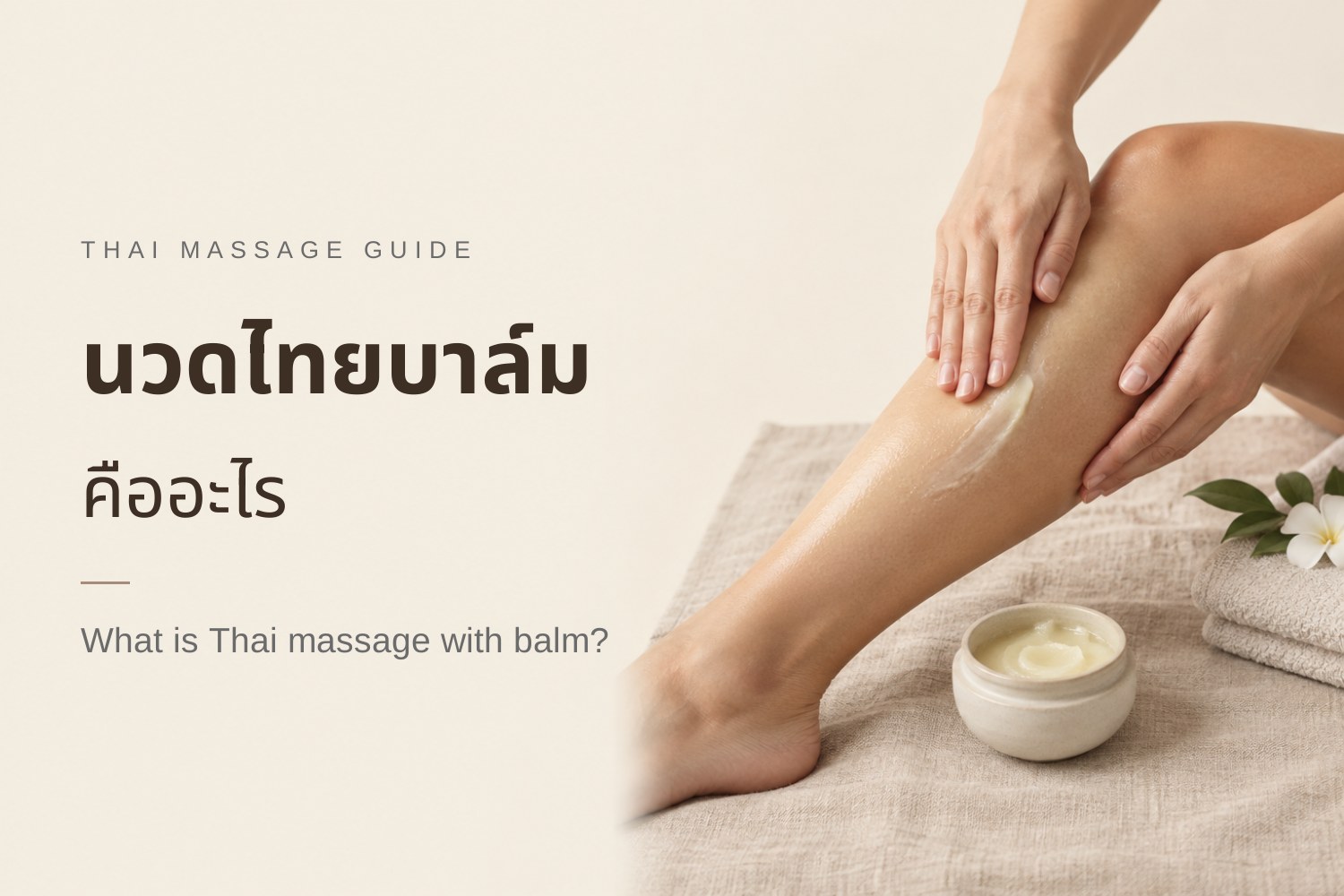
What Is Thai Massage with Balm, and What Role Does Balm Play?
Thai massage with balm is Thai massage that uses balm as part of the session. The product’s texture contributes to the contact between hands and skin. The word “balm” in the service name describes a product used during the massage; it does not refer to a single hands-on technique or mean that the rhythm will remain the same throughout.
It helps to distinguish the role of balm from pressure and hand movements. Balm may affect how smoothly the hands glide during stroking or circular movements, while the pressure you feel also depends on how the massage is performed. The slipperiness of the product alone should not be taken as an indication of how light or firm the massage will feel.
Massage balms can vary in scent and feel depending on their formula. The service name alone is therefore not enough to identify the ingredients or how the product will feel on your skin. If this is your first visit, you can ask about the product that will be used and share your preferences for scent and texture to communicate what feels comfortable during your time to relax.
How Does Balm Texture Affect Stroking and Circular Movements?
Stroking involves moving the hands along the skin, while circular movements involve moving the hands repeatedly around one area. These different movements may make the balm’s texture noticeable in different ways, so the sensation does not have to remain the same throughout the massage.
Balm may change how smoothly the hands move over the skin, depending on its formula and the amount used. During stroking, you may notice this in the continuity of the hands’ movement. During circular movements, you may notice the sensation within the same area. Not all balms provide the same amount of glide, and using more does not necessarily feel more comfortable.
During your massage, try to distinguish between wanting a change in pressure and disliking the feel of the product. For example, you could ask for lighter pressure or explain that the balm feels too slippery for your preference. Describing what you feel directly makes communication clearer than asking for everything to change at once. You can ask for the pressure and rhythm to be adjusted for comfort rather than putting up with a sensation you dislike.
Why balm formulas differ in scent and texture
The ingredients and their proportions influence a balm’s thickness, scent and feel on the skin. Not all massage balms spread in the same way or feel the same during stroking and kneading. Preferences for texture and scent are personal, so it helps to distinguish what feels comfortable to you from your expectations of a product.
Do not assume that every balm formula contains the same herbs or always feels warm or cool. A balm’s colour and scent intensity alone cannot tell you its ingredients or whether it suits your skin. A stronger scent is therefore no reason to expect greater relaxation.
Before your massage, ask for the product name and read the label, checking the ingredients, directions and precautions for that particular formula. If anything is unclear, ask rather than guessing based on colour, scent or your experience with another balm. Explaining that you prefer a mild scent or dislike a particular texture helps you communicate your preferences without relying on someone else’s experience.
What to ask before your massage and how to communicate during it
Before a Thai massage with balm, ask about the product and how it will be used, and clearly explain your preferences for scent and massage pressure. If a product has previously made your skin feel uncomfortable, share its name or any details you know, without assuming that every balm formula will feel the same.
- What balm do you use, and may I see the label?
- What ingredients does it contain, and what precautions should I know about?
- What does this formula smell and feel like?
- Where will the balm be applied, and can I ask you to avoid certain areas?
During your massage, share how you feel using short requests such as please use lighter pressure, please avoid this area, or I would like a break. If the scent makes you uncomfortable, say so straight away rather than waiting until the massage ends. Naming both the area and the adjustment you would like is clearer than simply saying you feel uncomfortable.
Choosing Thai Massage with Balm to Suit Your Break
Start with your preferences for scent and texture rather than choosing by the balm’s name alone, as each formula may feel different. If you dislike strong scents or certain textures, ask about the balm before the session begins and clearly explain your preferences, without assuming that all balms are alike.
Massage pressure is another preference to communicate separately from how the balm feels. Let the practitioner know what level of pressure feels comfortable, and ask for an adjustment during the massage if it feels too strong. Massage may help you feel relaxed, but you do not need to put up with a sensation you dislike just to complete your chosen session length.
When planning your break, consider both the massage duration and travel time so you can avoid rushing back to your next activity. Thai massage with balm 60 min is one option to use as a reference when planning. Choose a duration that fits the time you have set aside and your own comfort.
Frequently asked questions
How does Thai massage with balm differ from Thai massage?
Thai massage with balm incorporates balm to help gliding and kneading movements feel smoother on the skin. The difference is the added texture and scent of the product, which may vary depending on its formula and how it is used.
Do all massage balms have the same scent and ingredients?
Massage balm formulas may differ in ingredients, scent and texture, so they should not all be assumed to have the same ingredients or properties. If you are sensitive to scents or have experienced skin discomfort from an ingredient, ask for product details and let your massage provider know before the session begins.
Does every balm feel warm or cool?
Not all balms produce the same warming or cooling sensation. This depends on the ingredients and formula, and how the product feels on the skin may also vary from person to person. Ask how the balm is expected to feel before your massage begins.
What should I do if I dislike the scent or feel skin discomfort during the massage?
Tell your massage provider straight away and ask them to stop using that balm. If your skin feels uncomfortable, stop the massage in that area and remove the product according to the label instructions. There is no need to put up with a scent or sensation that makes you uncomfortable.
What should I ask before choosing Thai massage with balm?
Ask which balm formula will be used, what ingredients and scent it has, and whether it creates a warming or cooling sensation. You can also ask where the balm will be applied, what the massage involves and how long the session lasts. Before starting, share your preferences for scent and pressure, along with any ingredients that have previously caused skin discomfort.