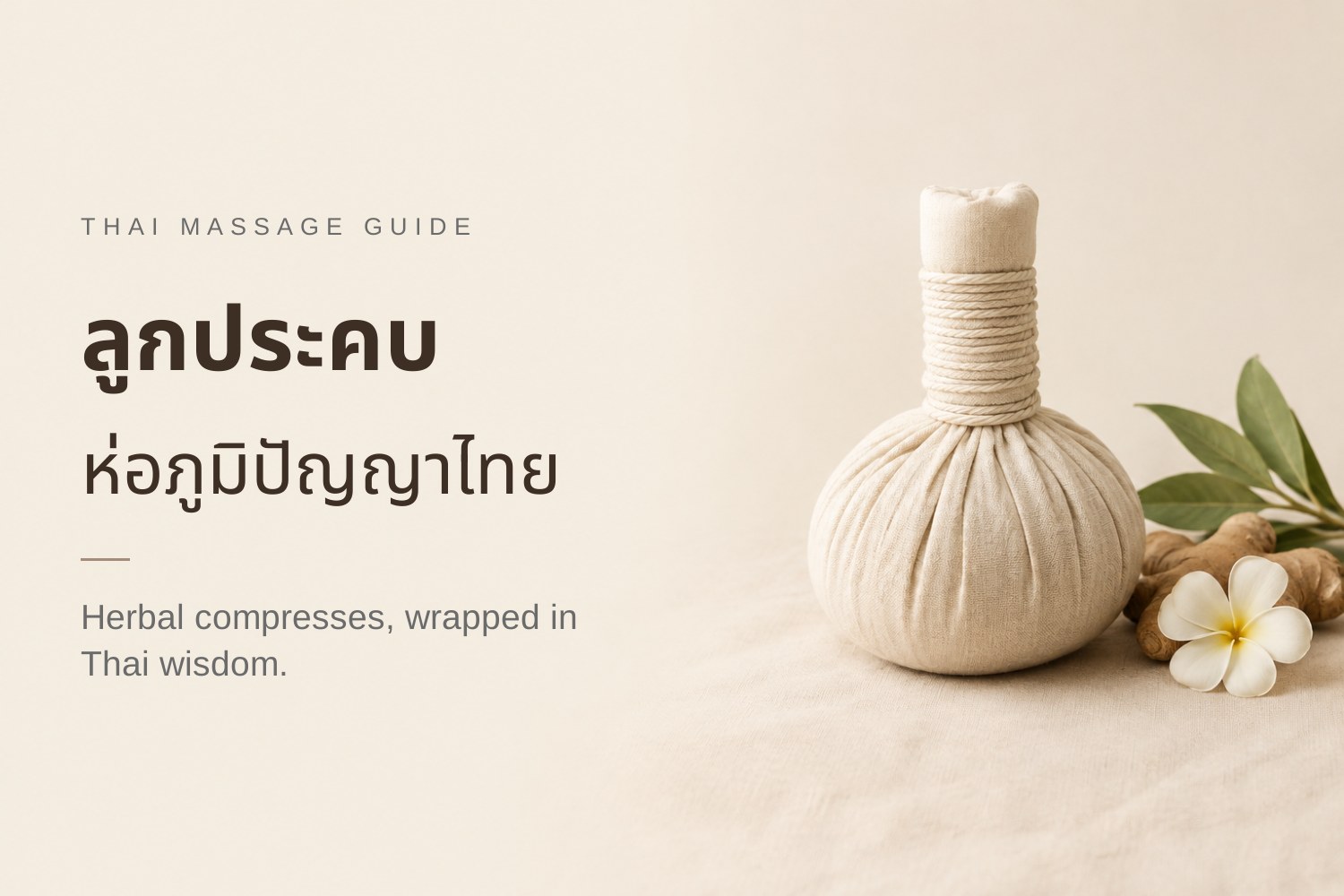
Understanding Herbal Compresses Through Materials and Thai Traditions
An herbal compress is made by placing prepared pieces of herbs into a cloth, wrapping and tying it into a ball with a handle, and then steaming it until hot. Understanding how Thai herbal compresses are made means looking at plant preparation, cloth selection and shaping—not just the ingredient list.
Thai herbal compress traditions bring plants, scent and warmth together with massage for relaxation. The herbs sit inside, while the cloth holds the ingredients together and keeps them from making direct contact with the skin. The wrapped shape therefore has a practical role, rather than simply making the compress look neat.
When examining a compress, distinguish between the herb-filled ball and the handle formed by gathering the cloth. This makes the wrapping sequence easier to understand. Steaming prepares the compress by warming it before use, so forming the compress should be considered separately from deciding whether it is ready for contact with the skin.
Which Herbs Go Into a Compress, and What Cloth Should You Choose?
Common ingredients in herbal compresses include plai, turmeric, lemongrass and makrut lime peel. These are examples, not a requirement for every compress. Recipes can vary, so look at the ingredients in the particular recipe you are exploring rather than judging every recipe against a single list.
When preparing the ingredients, notice their scent, texture and piece size, as these details matter when bringing them together and wrapping them in cloth. Plai and turmeric are examples of ingredients prepared in pieces, while lemongrass and makrut lime peel illustrate how different plant parts can be used in a compress. Descriptions of ingredient scents should remain separate from claims about health effects.
For wrapping, choose clean cotton cloth with a weave tight enough to keep herb pieces from escaping easily. Consider the weave alongside the size of the ingredients, and leave enough cloth to gather into a handle. The key is that the cloth can hold the ingredients together in a ball—not simply its colour or appearance.
How to Make a Thai Herbal Compress: From Preparing the Ingredients to Wrapping the Cloth
Start by removing any spoiled parts, then wash the fresh herbs thoroughly and let them drain. Chop or lightly crush the herbs into small pieces so they are easier to arrange inside the cloth. Pieces that are too large or hard may create an uneven compress surface, so check their size before mixing them together.
Mix the ingredients until evenly distributed, then place them in the centre of the prepared cloth. Gently gather the edges of the cloth upward, keeping the ingredients together at the base. As you gather the cloth, shape the base into a round bundle and check that no hard pieces are pushing against the fabric to form sharp corners. Shaping it at this stage helps you spot where the ingredients need adjusting before tying.
Once the bundle is shaped, tie the neck firmly so the cloth holds the ingredients together. Then gather the remaining cloth into a handle, keeping it clearly separate from the round base. Before steaming, check the tightness of the neck and the smoothness of the surface again. If the ingredients still form hard clumps or the base is misshapen, rearrange them before continuing.
Why Herbal Compresses Are Steamed and How to Check Their Heat
Steaming transfers heat and moisture into the cloth and herbs, warming the compress and making its herbal aroma more noticeable. This differs from immersing the compress in boiling water: the heat comes through steam rather than soaking the entire bundle. Steaming should not be assumed to make a compress completely clean in every case.
A single steaming time should not be used for every compress, because its size, how tightly it is wrapped and the equipment used all affect its heat. Time alone is therefore not enough to determine whether it is ready to touch the skin. Always keep steaming and checking the heat before use as separate steps.
After removing the compress from the steamer, let it rest so it can cool down, then carefully check the heat of the cloth where it will touch the skin. Do not press a freshly steamed compress directly against the skin. If it still feels uncomfortably hot, let it rest longer and check again, prioritising comfortable warmth rather than using it while it is very hot.
Check the Compress Before Use and Care for It After Steaming
Before using a herbal compress, check the cloth all around for tears, make sure the string is securely tied, and ensure no hard ingredients protrude through the fabric. These details matter when holding the compress and placing it against the skin. If anything is damaged or poorly wrapped, stop and put it right before use.
After steaming, always check the heat before the compress touches the skin. Do not assume the whole compress is ready to use simply because the handle feels warm. The heat should not feel burning or uncomfortable. Pay attention to how your skin feels while using the compress, and stop immediately if it feels too hot or uncomfortable. There is no need to push through discomfort to complete the process.
After use, do not store a compress in a closed container while it is still warm and damp. Check its condition again before considering reuse. If you notice an unusual smell or mold, do not use it again, even if the outer cloth still looks intact. Its usable life depends on the ingredients and storage conditions, so appearance alone should not determine how many times it can be reused.
Frequently asked questions
Does a herbal compress need to contain every type of herb?
No. Ingredients vary depending on the recipe and the materials selected. Choose clean herbs that you can clearly identify, and avoid any ingredients you have previously had an allergic reaction to. The number of herbs alone does not determine the quality of a compress.
How does making a compress with fresh herbs differ from using dried herbs?
Fresh herbs already contain moisture. Wash and drain them before chopping or crushing them into pieces suitable for wrapping. Dried herbs contain less moisture; check that they have no mould and sprinkle them with enough water to moisten them before steaming. For either option, avoid ingredients with a musty smell or an unusual appearance.
How do you wrap a herbal compress securely and make a comfortable handle?
Place the herbs in the centre of a clean, tightly woven cloth that allows steam to pass through. Gather the corners and shape the herbs into a compact ball. Twist the cloth above the ball and tie it firmly with string. Fold or roll the remaining cloth into a handle, then secure it with string. Check that the handle feels comfortable, no herbs can escape, and no knots sit on the surface that will touch the skin.
Why are herbal compresses steamed rather than boiled in water?
Steaming transfers heat and adds moisture without immersing the compress directly in water. This keeps the cloth bundle from becoming as waterlogged as it would when boiled and reduces the amount of some components washing out into the water. A freshly steamed compress can still be too hot, so always check its temperature before it touches the skin.
How should you check a herbal compress for heat and cleanliness before use?
Check that the cloth is clean and intact, the string is secure, and there is no mould, musty smell or foreign material. After steaming, let the compress cool, then carefully test it briefly against the user's inner forearm, starting with a layer of cloth between the compress and the skin. If it feels too hot, stings or causes discomfort, stop contact and let it cool further. Do not leave a hot compress resting on the same spot.